
The Argument Usually Starts at the Bottom Panel
It's probably something like this: you're pulling bikes out of the garage and notice the bottom six inches of the door look puffy, the paint is bubbling, and there's a rust streak running down from one of the hinges. You mention it to your spouse. They glance over, shrug, and say it's just surface rust, wipe it down and forget it. You're pretty sure it's worse than that. Here's how to actually settle it, without guessing.
Why This Happens More Here Than People Expect
Garage doors in this part of California take a beating they don't get credit for. Winters bring real rain, and that water pools at the bottom of the door and seeps into any seam, screw hole, or ding in the paint. Then summer dries everything back out fast, often with dust and wildfire smoke in the air that settles into every crevice. That repeated wet-then-dry cycle is exactly what causes rust to start and paint to bubble, because moisture gets trapped under the surface and has nowhere to go. If your home is close enough to the water to get any salt air, that speeds the corrosion up even more, since salt holds moisture against metal longer than plain rain does.
Wood doors have a different version of the same problem: they absorb water at the bottom edge, swell, then shrink again as they dry, and that swelling is what makes a door start binding in its tracks or no longer sit flush in the frame.
How to Tell Cosmetic Rust From an Actual Problem
This is the part that actually settles the argument, because the two things look similar at first glance but mean very different things for your wallet.
- Surface rust is a thin orange film on top of the paint. It wipes or sands off, the metal underneath is solid, and it hasn't changed the shape of the panel at all.
- Structural rust has eaten through the paint and into the metal itself. You'll see pitting, flaking metal, or a rough, crumbly texture instead of a smooth surface.
- Swelling means the panel is no longer flat. Run your hand across it; if you feel a bulge, ripple, or soft spot, water has gotten inside the panel itself, not just on top of it.
- Bubbling paint without rust underneath can just be old paint failing in the sun and rain cycle. Bubbling paint with rust or softness underneath means moisture is already working on the metal or wood.
A good quick test: press firmly on the suspicious spot. If it flexes, gives, or feels spongy compared to the rest of the door, that's not cosmetic.
Where Moisture Damage Actually Starts
It's rarely the whole door at once. Watch for it in these specific spots:
- The bottom panel and bottom corners, where rain pools and splashes back off the driveway
- Around hinges and hardware, where the finish gets scratched during normal use and exposes bare metal
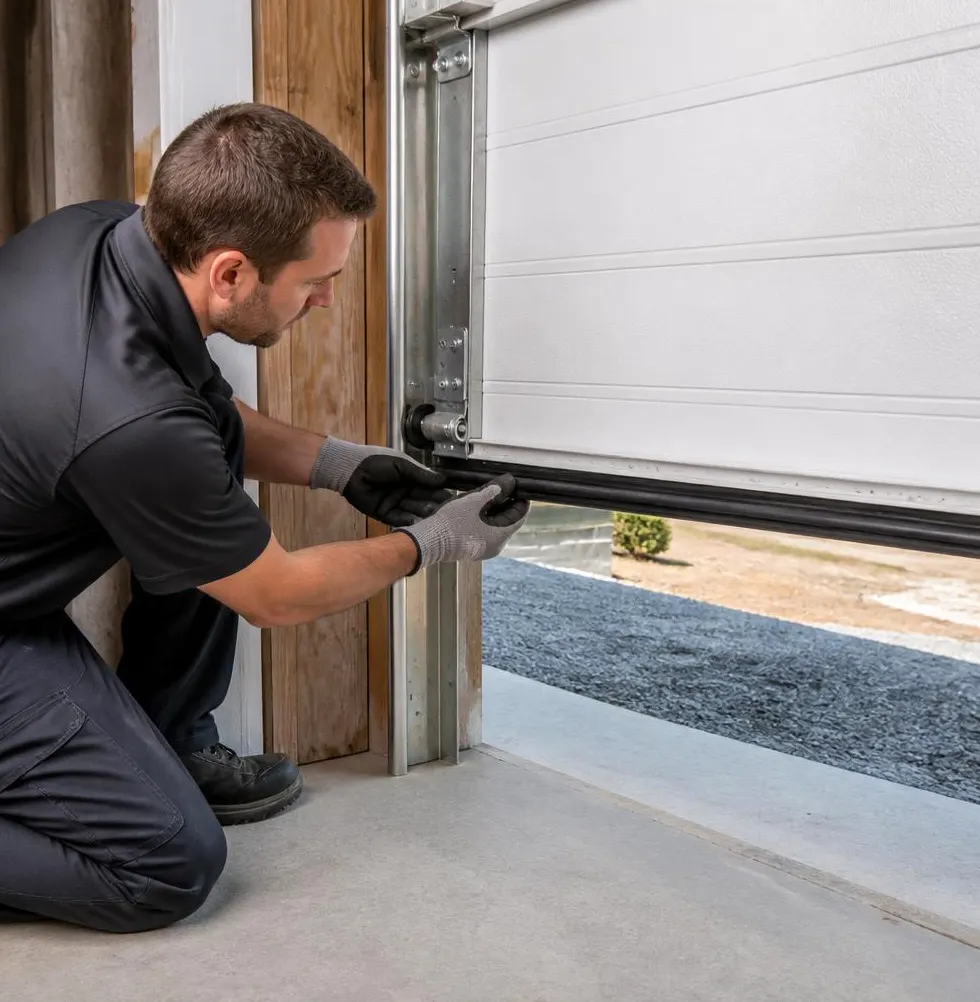
- Along the weatherstripping at the base, where a worn or torn seal lets water sit against the door instead of draining away
- Behind any dent or scrape, even small ones, since the protective coating is broken there
If your garage door has been retrofitted with extra bracing for seismic reasons, check around those attachment points too. Any spot where metal meets metal and the paint gets worn through is a place rust can start early.
What Can Be Fixed vs. What Can't
This is usually where the real decision gets made. Surface rust and failing paint can be sanded, treated with a rust-inhibiting primer, and repainted; that's a weekend project if you catch it early and the metal underneath is sound. A worn weatherstrip at the bottom is a cheap, fast fix that often stops future damage before it starts.
But once a steel panel has swollen or developed pitted, flaking rust, patching it is a short-term fix at best. The metal has already lost structural integrity in that spot, and painting over it just hides the problem while it keeps spreading underneath. Wood panels that have swollen and then dried repeatedly will usually keep warping in that same spot every rainy season, because the wood fibers have been stretched and don't fully return to shape.
In both cases, a single damaged panel can sometimes be replaced on its own without redoing the whole door, which is worth asking about before assuming you need a full replacement.
When to Call San Rafael Garage Door
If you're seeing swelling, pitted rust, or a door that's started binding or no longer closing flush, that's past the point of a weekend DIY fix. We'll check whether it's isolated to one panel or has spread into the track, hardware, or seal system, and whether a single panel replacement makes sense or the door's reached the end of its useful life. Our Garage Door Repair service handles panel and hardware fixes directly, and if the door's finish is sound but you want to stop this from happening again, our Garage Door Maintenance visits catch worn weatherstripping, exposed metal, and small dents before they turn into swollen panels next winter.
If you're a few rainy seasons away from needing a full replacement anyway, it's worth asking us about that timeline honestly rather than patching the same spot every year.
Settle It With a Second Opinion
Whoever's right about the rust spot, don't let it ride through another wet season. Call San Rafael Garage Door for a straight answer on what you're actually looking at and what it'll take to fix it right, for homeowners across San Rafael, CA and the rest of Marin County.